Building a better UCLA starts from the ground up. New buildings, renovations, and remodels prioritize sustainability through Leadership in Energy & Environmental Design (LEED) certification — a standard developed by the U.S. Green Building Council (USGBC) and used by UCLA Capital Programs, the department responsible for conceptualization, planning, design, and construction, with an architecture portfolio of several pinnacle-level projects in a row.
What gets built must be green, to meet the UC Sustainable Practices Policy requirement and UCLA’s own targets for Silver, Gold, or Platinum level certification. There are different categories: location and transportation, sustainable sites, water efficiency, energy and atmosphere, materials and resources, indoor environmental quality, integrative process, innovation, and regional priority. Each category has credits, with points awarded for water use reduction, renewable energy, rainwater management, open space, access to public transit, and more.
UCLA’s scorecard is stacked — a LEED leader among the UC institutions. There are 73 LEED-certified buildings, with 21 earning the highest level, Platinum. Sustainable features of these buildings include resource conservation (water and energy), use of natural light, enhanced indoor air quality, waste reduction and diversion, bicycle parking and EV charging, and native and drought-tolerant landscaping.
Laying the sustainable foundation here is architect and LEED Accredited Professional Todd Lynch, a principal project planner with Capital Programs, who also teaches and works with students.
Sustainably designed are residential halls, a residential restaurant, athletic facilities, a theater, fitness centers, research centers, treatment centers, and a conference center – academic spaces, administrative hubs, housing and dining, medical facilities, and more, all greened for living, learning, working, and providing care.
“Driving the success are all the amazing partners: project managers, groundskeepers, the energy services group, and others in UCLA Facilities Management, who support each other with a common goal, resulting in a harmonious workplace and shared sense of pride,” said Lynch.
“The buildings are more sustainable and healthier, with a lower impact, and the experience of working on them is also healthier and happier, which is a great aspect of LEED.”
These green buildings are better for the environment and their occupants through access to natural sunlight, advanced ventilation systems, and high-performance filtration systems that help improve health and well-being, even increasing productivity, by adding comfort.
LEED enables expansion with environmental benefits. While buildings may rise, carbon emissions will not, after the initial construction impacts. LEED buildings keep millions of pounds of greenhouse gases out of the atmosphere by reducing energy use, lowering utility costs, and diverting tons of waste from landfills.
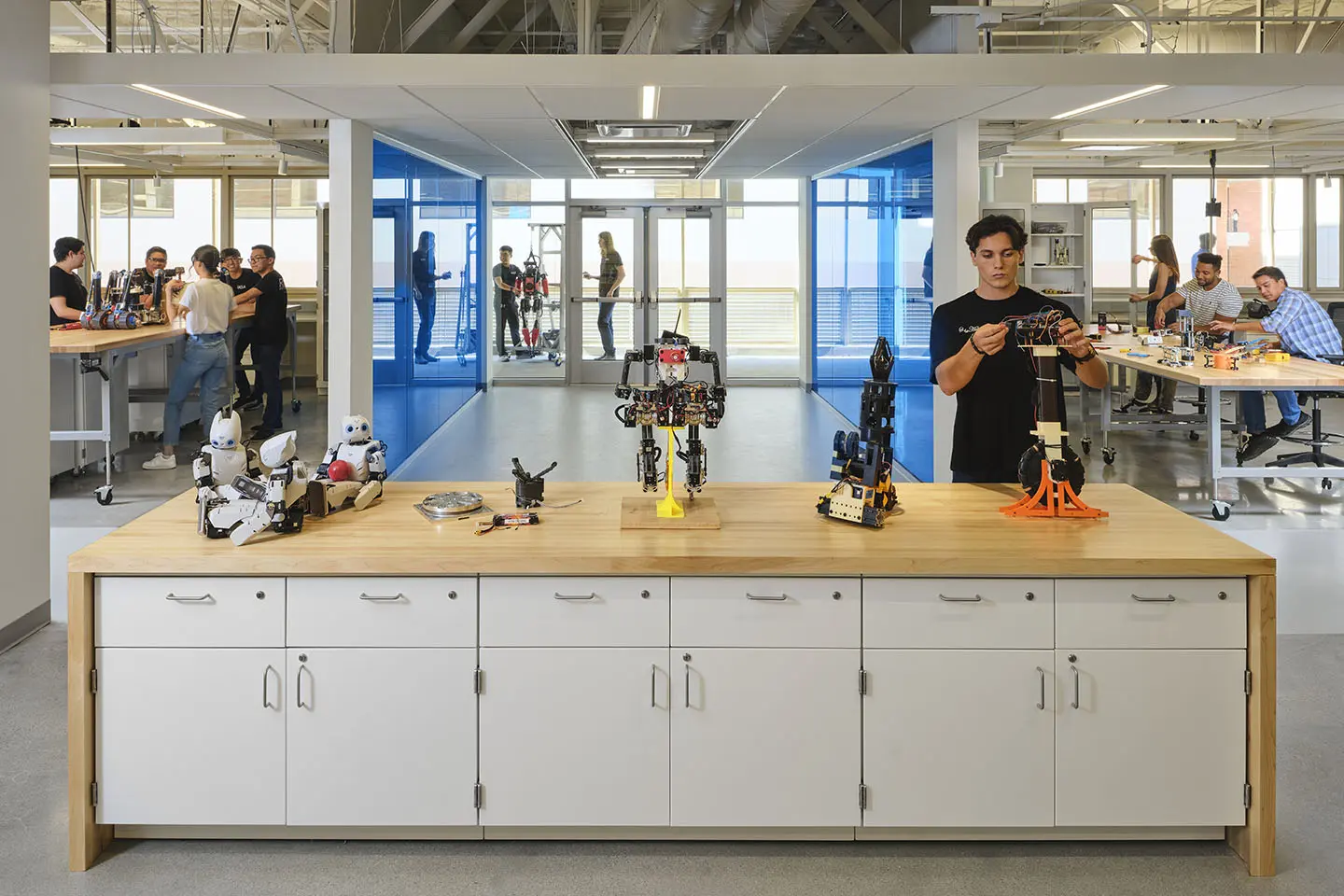
Recent efforts with distinguished Platinum LEED status are UCLA Health’s Pfleger Liver Institute center, the Data-Driven Advanced Synthesis Lab in the Molecular Science Building, and UCLA Samueli School of Engineering’s Robotics Institute laboratory. Talk about building for the future! Projects currently under sustainable construction are Gayley Towers, new affordable co-living apartments set to hopefully welcome residents this fall, and improvements to the John Wooden Center and Sunset Canyon Recreation Center.
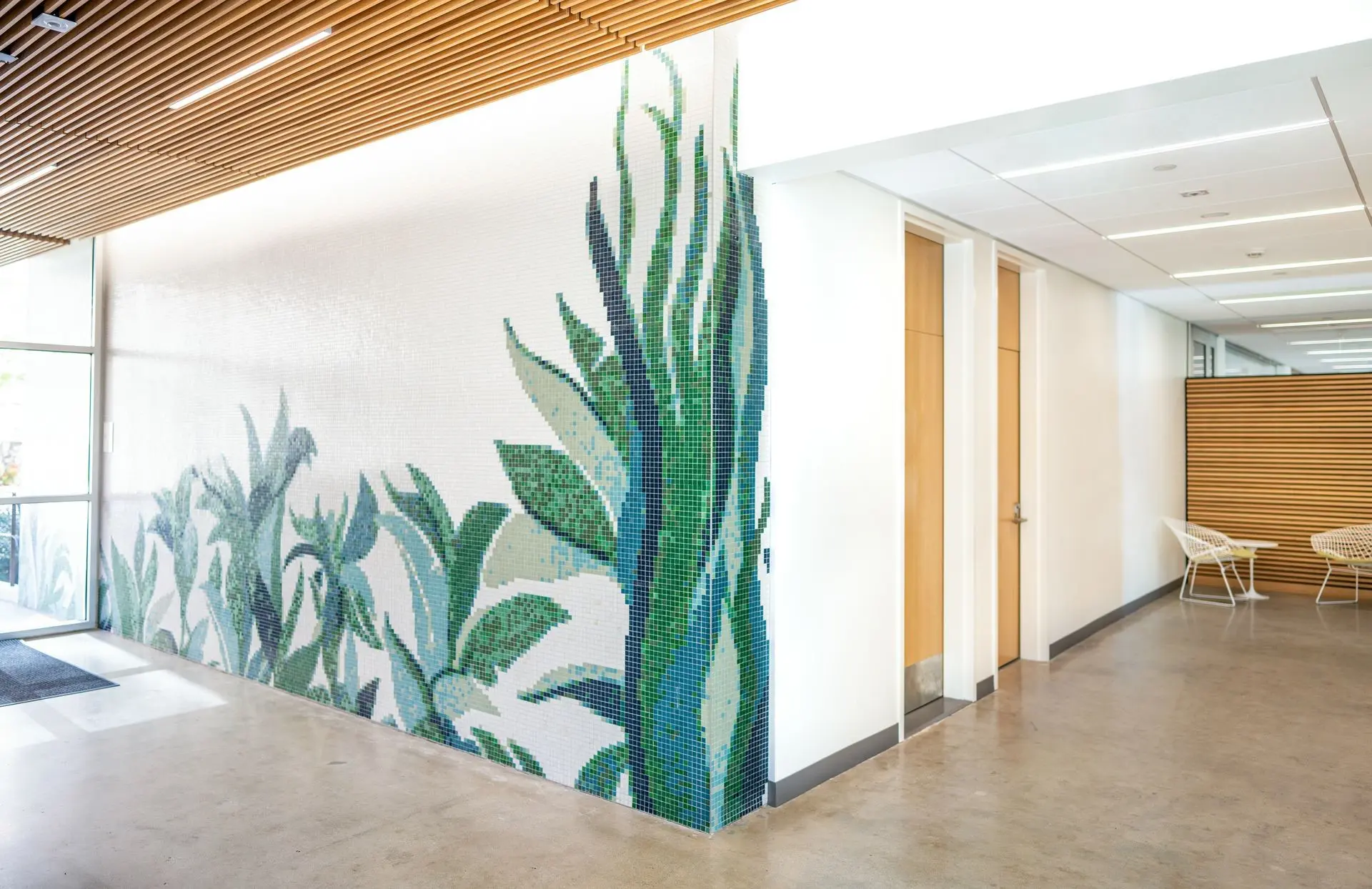
As February marks Black History Month, a noteworthy Platinum-level LEED renovation to highlight is UCLA’s Botany Building, designed originally by renowned L.A. architect Paul Revere Williams, the first African American member of the American Institute of Architects College of Fellows. An element of his initial design vision was finally able to blossom as part of the revamp: a new 285-square-foot plant-motif mosaic mural based on his drawings.
The pioneering Williams’ integration and respect for natural landscapes lives on as UCLA builds greener, also mindful of the environment.