

- This event has passed.
Can Abundance Be Sustainable? Merging Affordability and Climate Policy
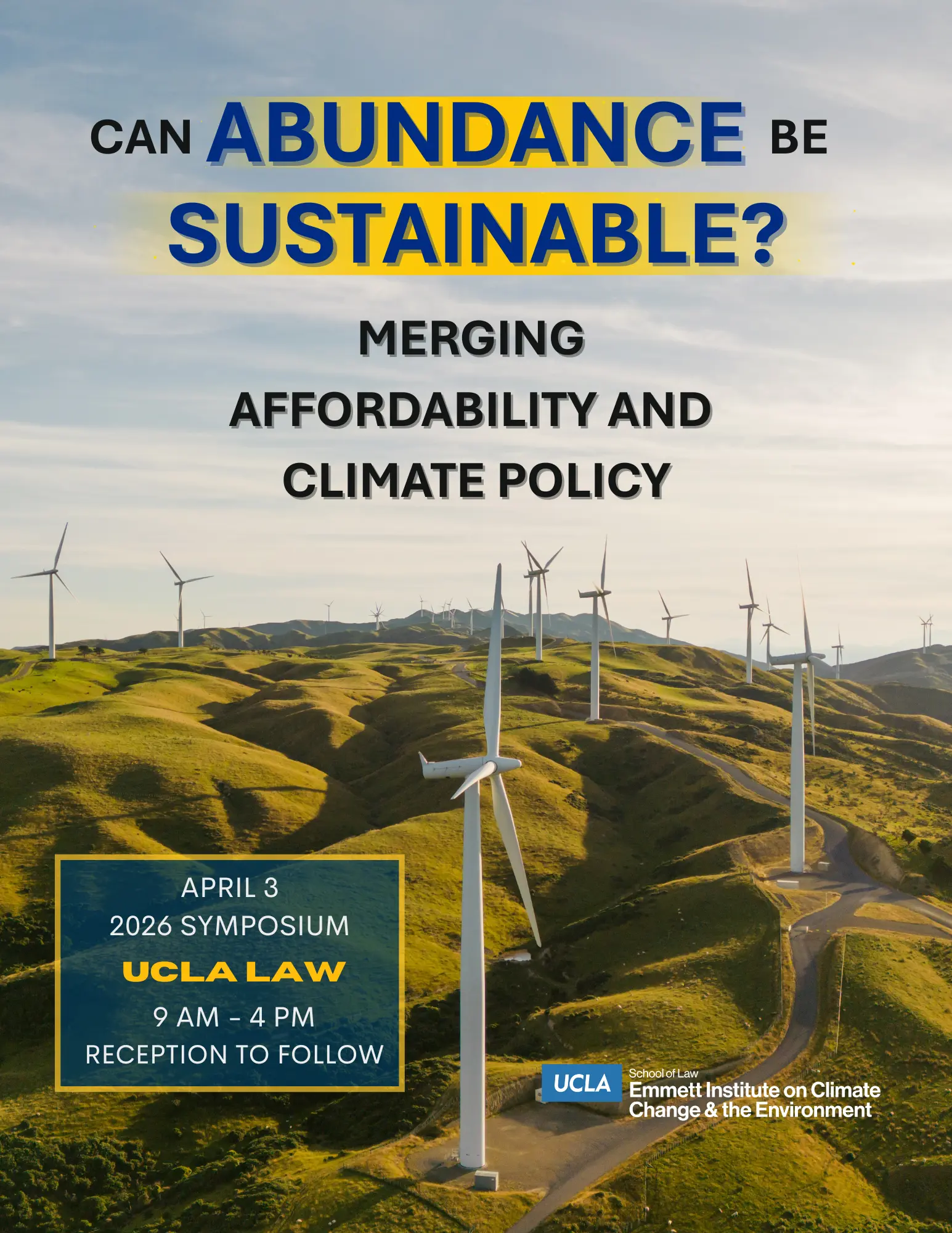
An all-day symposium that will focus on the interplay between affordability and environmental regulation.
Affordability concerns are ubiquitous in conversations on environmental and climate policy issues. Policymakers and advocates are wrestling with the question of whether cornerstone environmental laws and regulations, including CEQA and NEPA, can be robustly enforced while still recognizing and addressing cost-of-living pressures. The “Abundance” and YIMBY movements have informed how decisionmakers approach development and permitting decision across a range of contexts.
The Emmett Institute’s 2026 Spring symposium will focus on the interplay between affordability and environmental regulation, paying particular attention to recent developments in three areas: electricity generation and pricing, the transition away from fossil fuel extraction, and affordable housing. It will draw on state-level and national examples, including legislative actions in California on oil drilling and refining and a statewide freeze of building code updates, and on efforts across the country to manage growing electricity demand from data centers. Across these contexts, panelists will assess a range of reforms aimed at reducing costs and assess their compatibility with advancing environmental and environmental justice protections.
This day-long symposium at the UCLA School of Law is free and open to the public. It kicks off with a keynote address followed by the three panel discussions and an afternoon reception to continue the conversation.